Scattergood, homelessness and a long first day back
3 min readTuesday, August 4, 2026·14 members present
Published briefingOfficial record and source links included
The first Council meeting after recess moved from business-improvement-district votes into a long public-comment block, a close vote on the Scattergood power project, homelessness funding and a renewed fight over police accountability.
The Council returns under a new public-comment rule
Fourteen members were present. The meeting opened with the Council describing its transition to Senate Bill 707 and asking members who introduce amendments to summarize them aloud for the public.
The Clerk read tabulated ballot results for business improvement districts including Venice Beach, Century City, Westwood, West Adams and Old Granada. The Council moved through the early items with full attendance.
The comment period becomes the meeting's center of gravity
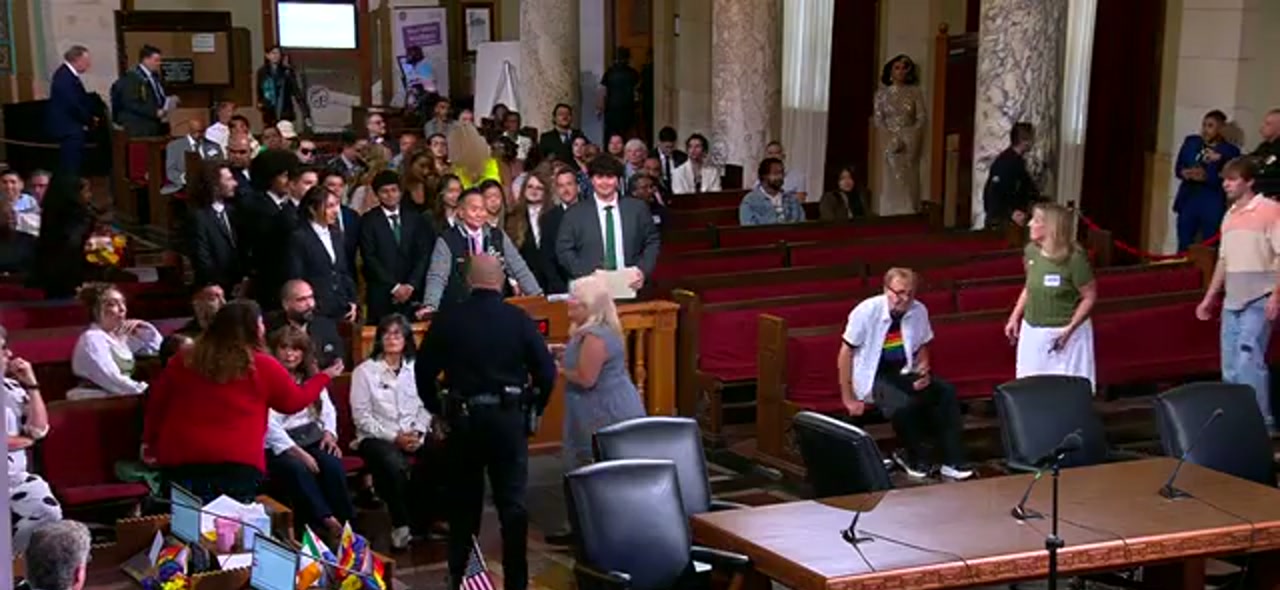
Speakers moved between the Scattergood appeal, homelessness and general public comment. Testimony focused on who gets protected by city rules, who gets heard and how the Council balances reliability, housing and climate commitments.
The Council President thanked speakers after more than an hour of testimony. The meeting then moved through the posted agenda and several items called special for separate votes.
Councilmembers debated the need for grid reliability against demands for enforceable renewable-energy and air-quality commitments. The appeal related to the Scattergood Generating Station modernization project passed 10-3, with the Council pressing DWP to keep negotiating.
Councilmember Ysabel Jurado described seven motions shaped by residents living with smoke, ash, odors and pests after the warehouse fire. She said the package was meant to turn demands for cleanup, accountability and resident power into city action.
Public Comment Quotes
“You see us in the halls, working on the pipes, you see us on the lines and then you don't see us when we're actually doing the work inside the stations.”
Public commenter · DWP labor and item 13 · auto-caption transcript
“You cannot create zones that are specifically going to keep out unhoused people knowing that that is who unhoused people are.”
Public commenter · Item 32 and homelessness · auto-caption transcript
“What we're asking for today is time.”
Public commenter · Scattergood appeal · auto-caption transcript
Agenda Items
ITEMS 1-6Business improvement district ballot tabulationsMoved forwardThe Clerk reported that the protest thresholds did not block proposed districts including Venice Beach, Century City, Westwood, West Adams and Old Granada.
ITEM 13Scattergood Generating Station modernization appealPassed 10-3The Council denied the appeal tied to the Green Hydrogen-Ready Modernization Project while asking DWP to keep negotiating over reliability, renewable power and enforceable conditions.
ITEM 32Council District 11 findings and homelessness concernsCalled specialPublic comment challenged the findings supporting a CD 11 action and connected the dispute to how city rules affect unhoused residents.
ITEMS 42, 44-45Charter reform, police accountability and homelessness administrationMixed actionsThe Council separately voted on items involving Charter Reform Commission Recommendation 54, a police-accountability report-back and a verbal amendment related to LAHSA and a new homelessness structure.
ITEMS 30, 46-51Fire recovery and interim housing operationsApproved in partThe agenda included proactive demolition options for abandoned fire-risk structures, annual homelessness funding, interim housing operations and resources for shelter and hygiene programs.
What Happens Next
The next posted City Council session is Wednesday, August 5 at 10:00 AM. Its official agenda is already available. Watch for the recording and journal after that meeting, especially for follow-up on the Scattergood negotiations, homelessness funding and the police-accountability debate.
Three-minute briefing complete
Go deeper on the decisions
The extended report separates the return from recess, the Scattergood energy fight, homelessness policy and the Council's accountability debate.
Continue · 6 min ↓Extended report open ↑
Extended report · 6 min
The first day back put reliability, housing and public access on the same record
August 4 was not one fight. It was a sequence of choices about who gets heard, what the city funds and how Los Angeles plans for power, housing and recovery at the same time.
The key distinction
The Scattergood vote moved the modernization project forward, but it did not settle the conditions opponents and Councilmembers want around renewable power, emissions and the future of the grid.
1 · Public access
Senate Bill 707 changed the meeting mechanics
The Council said it was working with the City Clerk and City Attorney on an online system for public review of amendments. In the meantime, members introducing amendments were asked to give short summaries aloud. The change is procedural, but it matters because late amendments are hardest for remote callers and first-time participants to follow.
2 · Energy
Scattergood became a choice between reliability and stronger conditions
The project is presented as a response to the planned retirement of Scattergood units 1 and 2 and the need for dispatchable power on the Westside. Opponents argued that a new methane-burning plant could lock in emissions and that a hydrogen-ready label is not the same thing as a funded clean-energy plan. The Council's 10-3 vote moved the appeal forward while leaving the negotiation over conditions open.
3 · Housing
Homelessness funding was spread across many smaller decisions
The agenda moved money for interim housing operations, LAHSA administration, shelter sites, hygiene services and the Alliance Settlement Agreement. That funding is easy to miss because it appears as a long list of transfers. Together, the items show the city maintaining a large service system while also debating how homelessness responsibilities should be reorganized.
4 · Accountability
The police-accountability debate exposed a limit of report-backs
Councilmember Hernandez objected to treating a meet-and-confer process as a substitute for the police-accountability measure the Council previously rejected. Her point was that a report-back can document a problem without changing who has authority to act. The item moved into the record as a visible disagreement about whether process is progress.
5 · What to watch
August 5 is the next test of the return from recess
The next session will show whether the first day's long comment period and energy debate carry forward. The immediate source to watch is the official August 5 agenda and, after the meeting, its recording and journal. The August 4 vote did not close the Scattergood negotiation, and the homelessness and accountability items remain active beyond a single roll call.
Sources and method: This report uses the official PrimeGov agenda, PrimeGov meeting record, official YouTube recording and the saved YouTube auto-caption transcript. Quotes and speaker identifications are auto-caption-based and should be checked against the recording before being treated as final.
Sources:Watch full recording ·
Official revised agenda ·
Official meeting record.
Timeline markers are positions in the official recording. This briefing is built from official agenda material and YouTube auto captions; quotes should be checked against a human transcript before being treated as final.